The Birthplace of the Mongol Empire
A landscape of open sky, horse culture, sacred ground, and long historical memory.
The great steppe horizon.
Eastern Mongolia opens into immense grasslands that seem to stretch without interruption beneath the sky. In Dornod, the plains are among the largest intact temperate grasslands remaining on Earth. In Khentii, the land rises into sacred mountains, rolling hills, and river valleys.
Together, these landscapes form the cradle of Mongolia’s history — a world built around movement, openness, and long-distance travel across unfenced land.
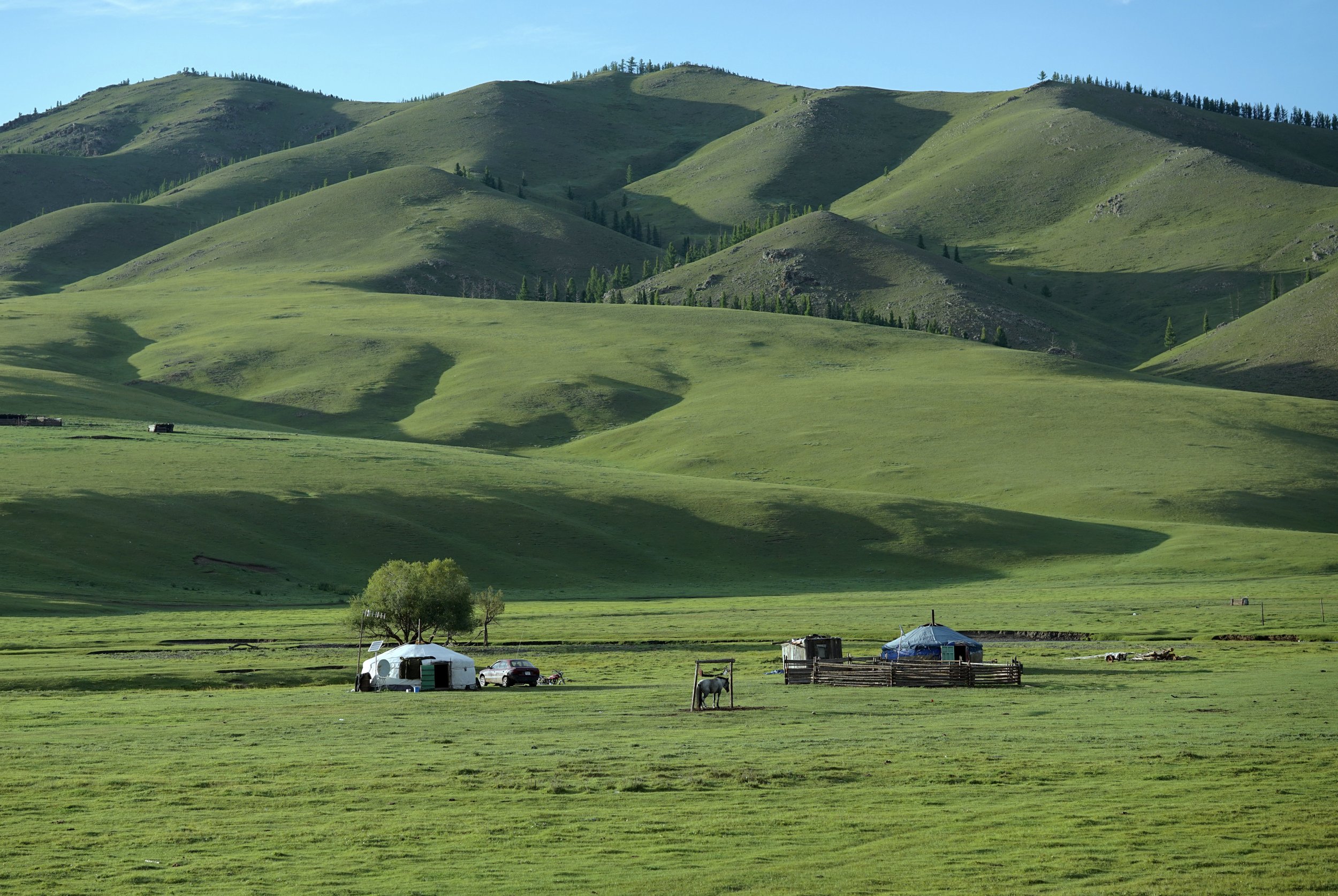

Where horse culture still defines the rhythm of life.
The eastern steppe is deeply connected to the story of Chinggis Khan and the origins of the Mongol Empire. Sacred mountains, old river valleys, and remote historical landscapes still shape the identity of the region today.
Beyond the historical narrative, this remains a living horse country. Nomadic herders continue to move with their livestock across the grasslands, and travel here offers a direct sense of the landscape that formed Mongolia’s nomadic identity.
Wildlife
- Mongolian gazelle herds across the plains
- Steppe wolves and foxes
- Rare grassland birds such as demoiselle cranes
- Marmots and small grassland mammals
Seasonally, Dornod supports one of the world’s largest ungulate migrations and one of Asia’s most remarkable grassland ecosystems.
Seasonal Information
The eastern steppe matters because it explains Mongolia at its core: movement, scale, and horse culture.
- Ride across the open grasslands of Dornod
- Camp in remote steppe valleys
- Explore the sacred landscapes of Khentii
- Follow the traces of imperial origins
Featured Steppe Expeditions
Journeys shaped around open-land travel, steppe history, and Mongolia’s enduring horse culture.