The Land of Caravans
The Gobi is not defined by emptiness — but by space, light, and geological time.
A desert of contrast, not sameness.
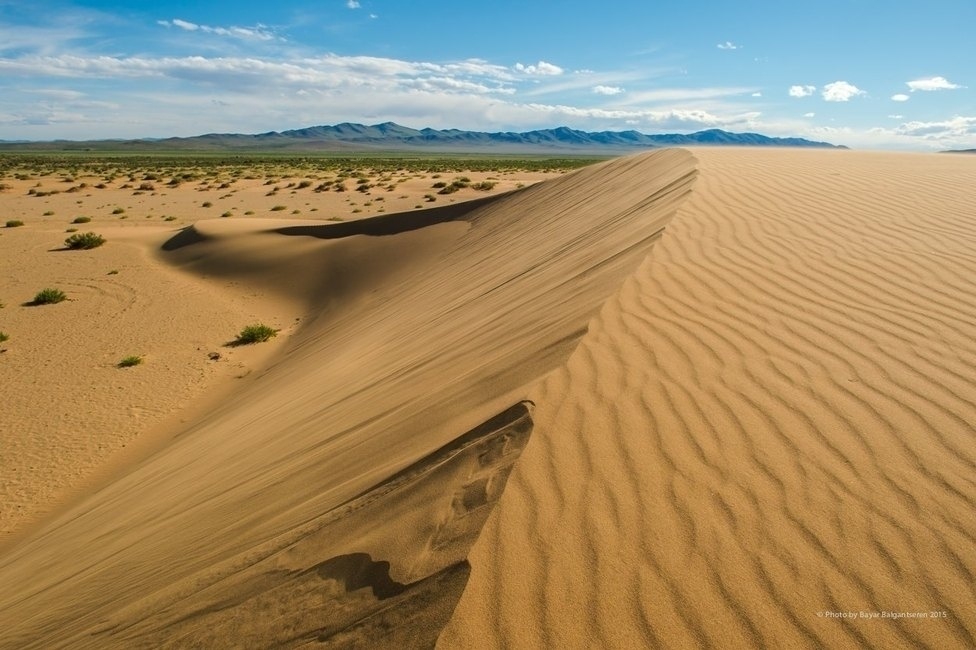
The Gobi is often imagined as endless sand. In reality, it is one of the most diverse desert landscapes on Earth. On a single route, the terrain can shift from fossil-rich red cliffs to towering singing dunes, from dry steppe valleys to hidden canyon ice fields in the mountains.
These contrasts make the South Gobi Mongolia’s most cinematic landscape. Distances are vast, the sky feels immense, and silence becomes part of the journey itself.

A living nomadic frontier.
Life in the Gobi moves slowly and deliberately. Nomadic families migrate seasonally with camels, goats, and sheep across wide desert pastures. Their gers appear like small islands in an ocean of land.
Hospitality here is simple and sincere: tea inside a ger, stories beside a fire, and travel shaped by weather, livestock, and long horizons. The Gobi is not only a desert — it is a living nomadic frontier connected to caravan history and the old Silk Road world.
Wildlife
- Wild Bactrian camels
- Asiatic wild ass (khulan)
- Black-tailed gazelle
- Steppe wolf
- Rare desert birds and reptiles
In remote parts of the southern desert, the critically endangered Gobi bear still survives. Sightings are never guaranteed, but the sense of wilderness is unmistakable.
Seasonal Information
The South Gobi is where our expedition philosophy comes alive most clearly.
- Multi-day camel caravan journeys
- Traverses across the Gobi Golden Triangle
- Milky Way desert night experiences
- Remote glamping in dune landscapes
Featured Gobi Caravan Expeditions
Signature southern routes built around caravans, landscape immersion, and desert rhythm.